Guides
The Best Horror Movies to Watch Tonight, Sorted by What Kind of Scared You Want to Be
Horror is not one genre, it is five. This guide sorts the best horror movies by the specific type of fear they produce, so you can match the film to the mood instead of gambling on a title.
Hero image: The Shining (artwork via TMDB)
Key takeaways
- Pick horror by the type of fear you want, not by which film is objectively scariest.
- Slow-dread horror (Hereditary, The Witch) and jump-scare horror (Sinister, The Conjuring) are almost opposite experiences.
- The single most reliable pick for a mixed group is Get Out: genuinely frightening, genuinely funny, and nobody walks out.
- Eight of the twenty films here run under 100 minutes, which matters more on a weeknight than any ranking does.
"What is the scariest movie ever made" is the wrong question. It produces the same five answers every October and most of them will not do anything for you, because fear is not a single sensation. The dread that builds across two hours of The Witch and the electric shock of a jump scare in Sinister are unrelated experiences that happen to share a shelf at the video store.
So this guide is organized by effect. Five categories, each with the films that do that specific thing better than anything else, plus honest notes about runtime and how hard a watch each one is. Every title links to its full page here with the trailer and current streaming options, and the horror genre catalog has the wider list if you want to browse.
Type 1: Slow dread that ruins your week
These films barely startle you. They accumulate. The horror arrives as a slowly dawning understanding of what the film has actually been showing you, and it tends to outlast the credits by several days.
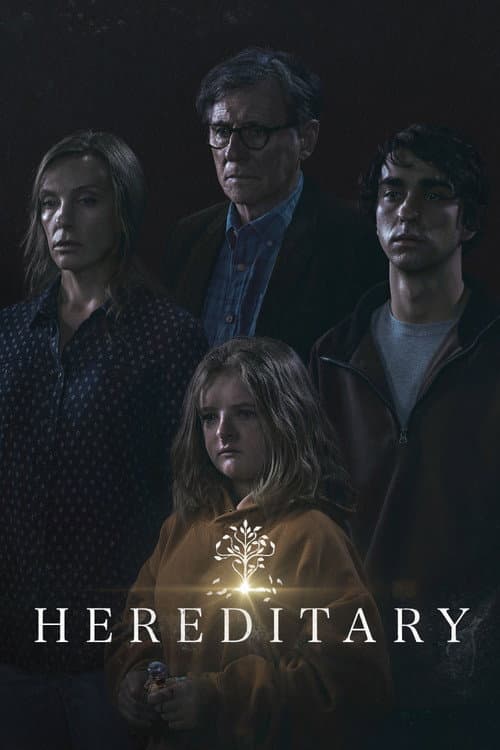
Hereditary (2018)
- 2h 8m
- TMDB 7.3/10
- Horror, Mystery, Thriller
Ari Aster's debut is the most emotionally punishing horror film of the last twenty years, and it works because the first hour is not a horror film at all. It is a precise, well-observed family drama about grief and blame, and Toni Collette gives a performance so raw that the supernatural elements almost feel like an intrusion. Then the film's midpoint arrives and rearranges everything.
What separates it from imitators is control of information. Aster puts the answer on screen very early, in the background of ordinary shots, and trusts you not to see it. On rewatch the film is almost unbearable because you can see the machinery the whole time.
Be warned that this is a genuinely upsetting watch, not a fun one. The dinner table scene alone is more distressing than most films manage in their entirety.
Watch it if: you want the film that horror fans still bring up first, and you are prepared to feel bad.

The Witch (2016)
- 1h 32m
- TMDB 7.0/10
- Horror, Drama, Mystery
Robert Eggers reconstructed 1630s New England from period court records and diaries, and the dialogue is drawn from actual writing of the era. The result is a film where the horror comes from total immersion in a worldview: a family that genuinely believes the devil is in the woods, isolated with nothing to check that belief against.
At 92 minutes it is one of the tightest films here. The ambiguity is the engine: for most of its runtime you cannot tell whether you are watching a supernatural story or a study of a family destroying itself through paranoia, and the film is careful to keep both readings alive.
The ending divides people sharply. It is either the perfect resolution or a betrayal, depending entirely on which of those two films you thought you were watching.
Watch it if: you want atmosphere over incident and you do not mind subtitles for your own language.

The Shining (1980)
- 2h 24m
- TMDB 8.2/10
- Horror, Thriller
Kubrick's Overlook Hotel is the most effective haunted space in cinema, and almost none of that comes from what happens in it. It comes from geometry. The hotel's floor plan does not work. Corridors lead places they should not. Windows exist in rooms that have exterior walls on both sides. Your brain registers the wrongness before you consciously notice it.
Stephen King famously dislikes it, and his objection is fair: the film strips out the novel's sympathy for Jack Torrance and presents him as already broken on arrival. That is a worse adaptation and a much better film, because it makes the hotel's influence ambiguous rather than mechanical.
At 144 minutes it is long, and the middle stretch is deliberately becalmed. Sit with it. The pace is the point.
Watch it if: you want the most rewatchable film on this entire list.


Midsommar (2019)
- 2h 27m
- TMDB 7.1/10
- Horror, Drama, Mystery
Aster's follow-up to Hereditary does the counterintuitive thing: it happens almost entirely in bright daylight, in a beautiful meadow, at a flower festival. There is nowhere for anything to hide, and it is somehow worse.
The film is really about a relationship that should have ended before the trip started, and the horror plot functions as an extremely elaborate breakup. Florence Pugh anchors it with a performance built almost entirely on suppressed panic.
At 147 minutes it is the longest film in this section and it does drag in the second act. The director's cut adds another 24 minutes and is only for people who loved the theatrical version.
Watch it if: you want daylight horror and a breakup movie disguised as a folk-horror film.
Type 2: Jump scares done properly
Jump scares have a bad reputation because most films use them as punctuation for nothing. Used well, they are a legitimate technique: the film builds a rhythm, teaches you when to relax, and then breaks the pattern. These three do it with real craft.

The Conjuring (2013)
- 1h 52m
- TMDB 7.5/10
- Horror, Thriller
James Wan is the best pure scare technician working, and this is his most disciplined film. The famous hide-and-clap sequence is a masterclass: the camera holds still, the geography is completely clear, and the scare is built entirely from sound and an empty frame.
The film is old-fashioned in the best sense. It cares about its characters, it takes its time, and it is shot in warm 1970s browns rather than the desaturated blue that swallowed horror in the 2000s.
It is also the least upsetting film in the entire guide, which makes it an unusually good gateway for people who claim not to like horror.
Watch it if: you want to be scared without being disturbed.

Sinister (2012)
- 1h 50m
- TMDB 6.9/10
- Horror, Thriller, Mystery
A researcher moves his family into a house where a murder occurred and finds a box of home movies in the attic. The found-footage sequences inside the film are the scariest thing in it, partly because of Christopher Young's score, which sounds less like music and more like a machine malfunctioning.
The plot mechanics are fairly standard and the ending arrives exactly where you expect. What is not standard is the sustained physical unease: a 2020 science study measuring viewers' heart rates famously ranked this the most frightening film tested, and the methodology was silly but the result matches most people's experience.
Ethan Hawke, sober and increasingly rattled, does more work than the material strictly requires.
Watch it if: you want the most reliable pure fright response of any film here.

A Nightmare on Elm Street (1984)
- 1h 31m
- TMDB 7.3/10
- Horror
Wes Craven's premise is one of the best in the genre: a killer who attacks you in your dreams, so the one thing you cannot do indefinitely is stay awake. It also produces horror's best structural rule, since the audience knows the characters must eventually fall asleep.
The 1984 original is much stranger and more surreal than the sequels that turned Freddy into a joke. The effects are handmade and wonderful: the rotating bedroom, the stretching wall, the body bag dragged down an empty corridor.
At 91 minutes it moves. This is also the only film here where the sequels actively damage the original's reputation, so treat it as a standalone.
Watch it if: you want a great 1980s horror premise executed at 91 minutes.
Type 3: Paranoia, where the threat might be a person
The most durable horror sub-genre, because it does not need a monster. It just needs you to stop being sure about the people in the room.

Get Out (2017)
- 1h 44m
- TMDB 7.6/10
- Mystery, Thriller, Horror
The best horror film of the last decade and the most useful one to recommend, because it works for people at every level of genre tolerance. Jordan Peele built a film where the horror is social before it is supernatural: the discomfort of being the only Black man at a suburban garden party where everyone is being extremely, pointedly nice to you.
Every element is doubled. The film is genuinely funny, and the comedy never breaks the tension because it comes from the same source. The tea cup, the deer, the photographs on the wall: almost nothing is decorative.
At 104 minutes it is perfectly paced, and it is the single best choice on this page for a group with mixed horror appetites.
Watch it if: you want one film that works for everyone in the room.

The Thing (1982)
- 1h 49m
- TMDB 8.1/10
- Horror, Mystery, Science Fiction
Twelve men in an Antarctic research station and an organism that can perfectly imitate any of them. Carpenter's 1982 film is the purest paranoia machine ever built, and the blood test sequence is the best scene of its type in any genre.
Rob Bottin's practical effects are still shocking because they are physically present. Nothing here is smoothed or weightless. When something tears open, it tears open in the room with the actors, and their reactions are to an actual object.
The ending refuses to resolve. That was considered a failure in 1982 and is now correctly understood as the only honest place the film could stop.
Watch it if: you want the definitive who-is-it thriller and effects that still hold up.

Rosemary's Baby (1968)
- 2h 18m
- TMDB 7.8/10
- Drama, Horror, Thriller
The horror here is almost entirely bureaucratic. A young woman becomes pregnant, her neighbors are excessively helpful, her husband's career suddenly takes off, and every single person she raises a concern with reassures her calmly and completely. The film is about not being believed, and it is more frightening now than it was in 1968.
Mia Farrow's physical transformation across the film is the performance that carries it. She gets thinner, greyer, and more certain, while everyone around her gets warmer and more insistent that she is fine.
There is essentially no gore, no jump scare, and one brief unsettling sequence. Its power is entirely accumulated dread.
Watch it if: you want horror with no monster and a very slow tightening screw.
Type 4: Visceral, mean, and physical
Sometimes you want the film to be an assault. These are the ones that do it with actual filmmaking behind them rather than volume alone.


The Texas Chain Saw Massacre is far less gory than its reputation and far more upsetting, because Tobe Hooper shoots it like a documentary. Evil Dead II is a horror-comedy of genuine slapstick genius. Green Room traps a punk band in a neo-Nazi bar and is the tensest 95 minutes here. I Saw the Devil is the most brutal film on this page by a distance, and also one of the best directed. Suspiria is Argento's colour-saturated fever dream with a soundtrack that will not leave you alone. The Substance is the recent body-horror success that pushes its final act well past where you expect it to stop. Train to Busan is the best zombie film of the century and secretly a father-daughter drama. And Talk to Me is the sharpest horror debut in years.
Type 5: The classics that still work
Older horror often fails the modern viewer because the shocks have been absorbed and repeated. These four have not been.


Psycho is structurally the boldest film Hitchcock made, killing its protagonist at the halfway mark in 1960 when nobody had done that. The Exorcist is slow, sober, and takes its theology seriously, which is exactly why it lands. Alien is a haunted house film set on a working freighter. And Halloween invented the slasher grammar in 91 minutes on almost no money, with a score Carpenter wrote himself in three days.
Picking for a group
Group horror is a different problem. The films that work best alone, the slow dread ones, are usually the worst group choices, because six people in a room will not sit in silence for ninety minutes and one person talking dissolves the entire effect.
| The room | Pick | Why it works |
|---|---|---|
| Mixed group, some horror-averse | Get Out | Funny enough to survive interruptions, scary enough to count |
| People who want to scream | The Conjuring | Loud, communal, nothing lingers afterward |
| Horror veterans | Hereditary | The one they will still be arguing about at 2am |
| A group that wants to laugh | Evil Dead II | 84 minutes of splatstick, plays perfectly to a crowd |
| Watching alone, lights off | The Witch | Needs total silence and gives it back |
A short note on horror ratings
Horror is the genre where aggregate ratings are least useful. Hereditary sits around 7.3 on TMDB, well below films it is obviously better than, because a substantial number of viewers rate it low for being effective. The Babadook and It Follows have the same problem. A horror film that upsets people gets punished in the average.
Read the vote count and the genre context instead of the raw number. We go through how to do this properly in our guide to reading movie ratings.
For more in this direction, try our twist ending thrillers list, the Korean cinema guide which covers several of the best modern genre films, or just browse the horror catalog and what is playing now.
Frequently asked questions
What is the scariest movie of all time?
There is no single answer, because different films target different fears. For sustained dread, Hereditary. For pure physical fright response, Sinister. For paranoia, The Thing. For a film that stays with you longest, The Witch or Rosemary's Baby.
What is a good horror movie for beginners?
Get Out or The Conjuring. Get Out balances real tension with genuine comedy and has an accessible story. The Conjuring delivers classic scares without disturbing content that lingers afterward.
What are the best horror movies under 100 minutes?
Evil Dead II (84 min), The Texas Chain Saw Massacre (83 min), Halloween (91 min), A Nightmare on Elm Street (91 min), The Witch (92 min), The Babadook (94 min), Green Room (95 min), Talk to Me (95 min), and Suspiria (99 min).
Which horror movies are good for a group?
Get Out, The Conjuring, Evil Dead II, and Train to Busan. All four survive people talking over them and produce shared reactions rather than private discomfort.
Is Hereditary too disturbing to watch?
It is the most emotionally punishing film on this list. It contains sustained depictions of grief and one sequence that many viewers find genuinely traumatic. If you want to be scared rather than upset, choose The Conjuring or Sinister instead.
Tags
Ratings, runtimes, and artwork come from TMDB and can change over time. teasertrack is a free discovery site, not a streaming service: every pick links to its full movie page where you can check trailers, cast, and current availability.