
Guides
The Best Korean Movies: A Complete Starting Guide to the World's Most Exciting Film Industry
Korean cinema spent twenty years quietly becoming the most consistently exciting film industry on earth. Here are the sixteen films that prove it, and the right order to meet them in.
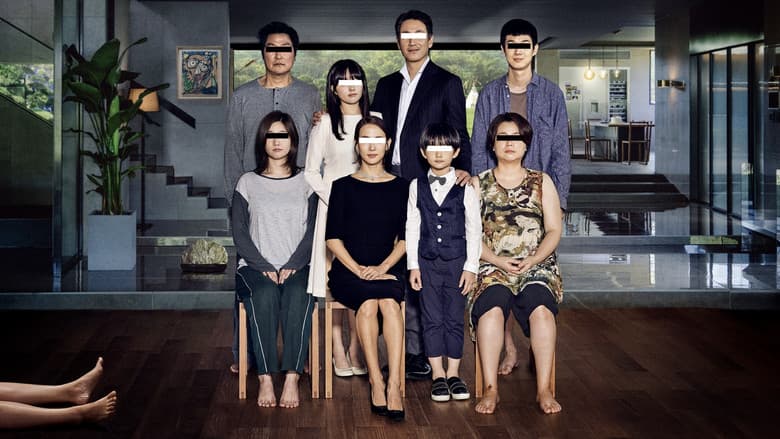
Hero image: Parasite (artwork via TMDB)
Key takeaways
- Parasite is the best entry point and the only foreign-language film to win Best Picture.
- Korean genre films routinely change tone mid-scene, which is the single hardest thing for newcomers to adjust to.
- Bong Joon-ho and Park Chan-wook are the two essential directors, and they work in almost opposite registers.
- Several of these films are genuinely brutal. The list flags which ones before you press play.
In 2020, Parasite became the first film not in English to win Best Picture, and a lot of people discovered Korean cinema that week. What they were actually discovering was the tail end of a twenty-year run that had already produced some of the best thrillers, horror films, and social dramas anyone had made anywhere.
The industry's defining trait, and the thing that trips up new viewers, is tonal instability. A Korean film will move from broad comedy to genuine horror to political tragedy inside a single scene, without signalling the transition. Western genre film almost never does this, and the first instinct is to read it as a mistake. It is not. It is a deliberate technique for keeping you off balance so the emotional hits land without warning.
This guide is ordered as a path rather than a strict ranking: where to start, where to go next, and which ones to save until you know what you are in for. Every title links to its full page here with the trailer and current availability.
Start here: the three essential entry points

Parasite (2019)
- 2h 13m
- TMDB 8.5/10
- Comedy, Thriller, Drama
Bong Joon-ho's masterpiece and the correct first film for almost everyone. A poor family in a semi-basement apartment methodically infiltrates a wealthy family's household, one job at a time. For roughly an hour it is a heist comedy and it is very funny. Then a doorbell rings and the film becomes something else entirely.
The architecture does most of the thematic work. The Kim family lives below street level and looks up at people urinating on their window. The Park house sits on a hill behind a wall. Every movement between the two worlds is filmed as a physical climb or descent, and by the third act you have absorbed the geography so completely that a flight of stairs carries meaning.
It won four Academy Awards including Best Picture, Best Director, and Best Original Screenplay. What is impressive is how little it compromises: there is no English-speaking character, no explanation for outsiders, and no moral resolution offered. Nobody in the film is a villain and nobody is innocent.
At 133 minutes it moves fast. It is also the most rewatchable film here, because the first hour is full of setups you cannot possibly recognize the first time.
Watch it if: you are starting from zero. This is the film.

Train to Busan (2016)
- 1h 58m
- TMDB 7.8/10
- Action, Horror, Thriller
The most purely entertaining film on this list and the best zombie film of the century. A distant workaholic father takes his daughter on a train from Seoul to Busan on the morning an outbreak begins, and the film spends 118 minutes tightening a vice.
The action staging is genuinely excellent. Confined-space zombie sequences are hard to shoot legibly and Yeon Sang-ho keeps the geography of every carriage clear, which is why the tension works. The rule that the infected cannot see in the dark produces one of the best set pieces in modern action cinema.
It is also, underneath, a fairly angry film about Korean corporate culture and the specific selfishness it rewards. The antagonist is not a zombie.
The final ten minutes have made grown adults cry in public. Consider yourself warned.
Watch it if: you want a great action film first and a Korean cinema education second.

Memories of Murder (2003)
- 2h 11m
- TMDB 8.1/10
- Crime, Drama, Thriller
Bong's second film and, for many Korean critics, still his best. Two rural detectives in 1986 investigate the country's first documented serial killings, using methods that range from incompetent to actively criminal, against a backdrop of a military dictatorship that has other priorities.
It is structured as a procedural and functions as a national indictment. The police torture suspects because that is the available technique. Evidence is lost because there is no forensic infrastructure. A blackout drill means the streets are empty on the night of a murder. The film never states the connection between authoritarianism and investigative failure, it simply shows the same institution doing both.
Song Kang-ho, the best actor working in Korea, plays a detective whose confidence steadily collapses across 131 minutes. The final shot is one of the great endings in crime cinema.
The real case was solved in 2019, sixteen years after the film, which adds an extra layer to the closing scene.
Watch it if: you want the best crime film here and can handle an unresolved ending.
Next: the Park Chan-wook run
If Bong is the social satirist, Park Chan-wook is the aesthete. His films are gorgeously composed, formally playful, extremely violent, and frequently very funny in ways that make you uncomfortable about laughing.

Oldboy (2003)
- 2h 0m
- TMDB 8.2/10
- Thriller, Mystery
The film that introduced Korean cinema to most of the West. A man is imprisoned in a single room for fifteen years without explanation, released without explanation, and given five days to work out who did it and why.
The corridor fight, a single unbroken side-on take of one man with a hammer against roughly twenty attackers, is the most imitated action sequence of the last twenty-five years and was shot in seventeen takes over three days.
The ending is the reason people still argue about this film, and it is genuinely one of the most upsetting reveals in mainstream cinema. Do not read anything about it first.
Be clear-eyed: this is a nasty film. It contains a live octopus being eaten, sustained violence, and a conclusion designed to make you feel ill. It is also brilliant.
Watch it if: you want the canonical Korean revenge thriller and you know what you are signing up for.

The Handmaiden (2016)
- 2h 25m
- TMDB 8.2/10
- Thriller, Drama, Romance
Park's most beautiful film, transplanting a Victorian English novel to 1930s Korea under Japanese occupation. A pickpocket is hired to pose as a maid to a wealthy heiress and help a con man seduce her. Then the film restarts and tells you what was actually happening.
The three-part structure is the best use of perspective shifting in recent film. Part one is a con. Part two reveals the con was inside another con. Part three is what happens when everyone finally stops lying.
The production design is extraordinary: a house built half in Japanese style and half in English, which is itself the thesis of the film. At 145 minutes it never sags.
Contains extended explicit sexual content and a genuinely disturbing basement sequence. It is also the most romantic film on this list.
Watch it if: you want the most gorgeous thing here and a plot that keeps rebuilding itself.

Decision to Leave (2022)
- 2h 19m
- TMDB 7.3/10
- Thriller, Mystery, Romance
Park's late-career masterpiece and by far his gentlest film. A detective investigating a man's fall from a mountain becomes obsessed with the widow, who may or may not have killed him. There is essentially no violence and no sex, which for this director is a statement.
The filmmaking is the most inventive of his career. Park uses match cuts, phone screens, and impossible point-of-view shots to put the detective inside scenes he is only imagining, so you can never quite separate surveillance from longing.
The final twenty minutes contain a reveal that recontextualizes the entire film into something almost unbearably sad. It is the best Korean film of the 2020s so far.
Watch it if: you want a restrained, adult, formally dazzling romance disguised as a murder mystery.
The heavier watches
Everything below is excellent and everything below is harder. Do not start here.

Burning (2018)
- 2h 28m
- TMDB 7.4/10
- Mystery, Drama, Thriller
Lee Chang-dong adapts a Haruki Murakami short story into 148 minutes of quiet, growing unease. A young aspiring writer reconnects with a woman from his hometown, who returns from a trip with a wealthy, charming man named Ben. Ben has a hobby he explains calmly and which may or may not be a confession.
Almost nothing is confirmed. The film is built entirely from ambiguity and class resentment, and the protagonist's inability to distinguish between what is happening and what he needs to be happening is the engine.
Steven Yeun's performance as Ben is the most quietly frightening thing on this list, precisely because he is never anything other than pleasant.
Watch it if: you like films that refuse to resolve and you have the patience for a slow burn.

Mother (2009)
- 2h 9m
- TMDB 7.7/10
- Crime, Drama, Mystery
Bong Joon-ho's most underrated film. A mother whose adult son has an intellectual disability sets out to prove he did not commit a murder, and the film follows her investigation with increasing dread about what she will find and what she will do with it.
Kim Hye-ja, previously known primarily for warm maternal roles on television, gives a performance that weaponizes exactly that association. The opening shot of her dancing alone in a field makes no sense until the final scene, at which point it is devastating.
It is a crime film that turns out to be about the moral limits of parental love, and the answer it reaches is bleak.
Watch it if: you loved Memories of Murder and want the darker companion piece.

The Wailing (2016)
- 2h 36m
- TMDB 7.4/10
- Horror, Mystery
The most frightening film here and one of the strangest. A Japanese stranger arrives in a rural village, an illness spreads, people begin murdering their families, and a bumbling local policeman investigates while his own daughter starts showing symptoms.
At 156 minutes it is the longest film on this list and it uses the length to keep changing what kind of film it is: comedy, procedural, zombie film, exorcism film, folk horror. By the final act you genuinely cannot predict what the rules are.
The film deliberately withholds a definitive explanation, and the last thirty minutes are constructed so that the protagonist's decision, and yours, has to be made without sufficient information. That is the point.
Watch it if: you want the most ambitious horror film on this page and you have three hours.
Six more essentials


I Saw the Devil is the most brutal film on this page by a wide margin, a revenge thriller that keeps escalating past every point you expect it to stop. A Taxi Driver dramatizes the 1980 Gwangju uprising through a Seoul cabbie who takes a German journalist south for the fare and is superb. The Host is Bong's monster movie and secretly a satire about US military presence and Korean bureaucracy. Snowpiercer is his English-language class allegory on a train. Lady Vengeance completes Park's revenge trilogy with the most morally complicated entry. And Poor Things, while not Korean, is the closest thing in recent Western film to this tonal register if you want a bridge.
A suggested viewing order
| Order | Film | Why here |
|---|---|---|
| 1 | Parasite | The perfect introduction to tonal shifting |
| 2 | Train to Busan | Pure genre pleasure, confirms you are having fun |
| 3 | Memories of Murder | Introduces the political undercurrent |
| 4 | The Handmaiden | Introduces Park Chan-wook at his most beautiful |
| 5 | Oldboy | Now you are ready for the nasty one |
| 6 | Decision to Leave | The reward: the most sophisticated film of the set |
Why the industry got this good
Two things converged. Korea's screen quota system, which required cinemas to show domestic films for a minimum number of days per year, gave local production a guaranteed market through the 1990s. And the end of military censorship in the late 1980s released a generation of filmmakers who had a great deal to say about authority, class, and the recent past.
The result is a mainstream industry where a director can make a monster movie that is also about government incompetence, sell twelve million tickets domestically, and not be asked to soften anything. That combination of commercial scale and political directness is rare almost everywhere else.
If you want to keep going, our twist endings list features several of these films, the best horror movies guide covers the genre side, and you can browse thrillers and drama in the catalog directly.
Frequently asked questions
What is the best Korean movie?
Parasite, both as a film and as a starting point. Memories of Murder is the critical favourite within Korea itself, and Decision to Leave is the best of the last five years. All three are Bong Joon-ho or Park Chan-wook.
Which Korean movie should I watch first?
Parasite. It is accessible, superbly paced, requires no cultural background, and demonstrates the tonal shifting that defines the industry. Train to Busan is the alternative if you want pure entertainment first.
Are Korean movies very violent?
Some are, and the reputation comes mainly from Park Chan-wook's revenge trilogy and I Saw the Devil. Parasite, Train to Busan, Decision to Leave, Burning, and Minari are all comparatively restrained.
Should I watch Korean movies dubbed or subtitled?
Subtitled. Korean uses distinct speech registers for formal and informal address, and shifts between them carry plot and character information that English dubs consistently lose.
What is the scariest Korean horror movie?
The Wailing, which is also the most ambitious. Train to Busan is more thrilling than frightening, and Oldboy and I Saw the Devil are disturbing rather than scary in a conventional sense.
Tags
Ratings, runtimes, and artwork come from TMDB and can change over time. teasertrack is a free discovery site, not a streaming service: every pick links to its full movie page where you can check trailers, cast, and current availability.


